Most diffuser advice is about the machine. Very little is about the bottle in the cupboard, half full, cap on loose. That bottle has a clock on it, and it runs faster than people expect.
AATOL is a waterless (cold-air) diffuser brand — no water tank, no heat, no dilution, and an open oil system with no proprietary cartridges.
Two clocks: sealed and opened
A sealed bottle is close to a closed system. The oil sits under its own vapour, in the dark, and changes slowly. Opened, it becomes an open system: every time you uncap it you exchange the air above the liquid, and that exchange is what ages a fragrance.
What aging actually smells like
Fragrance oils are blends, and their components do not age at the same rate. The citrus, green and light floral notes at the top are the smallest, most volatile molecules — and the first to react with oxygen. So an old oil rarely announces itself as spoiled. It goes quiet: the opening flattens, the middle reads heavier, and the whole scent feels shorter than it used to.
Past that stage, three signals are reliable: a sharp, solvent-like edge in the first minute; a colour that has clearly darkened; and a liquid that has thickened or left a sticky ring inside the bottle. Any one of those and the oil is finished for a room you actually care about.
Why the bottle on the unit ages fastest
Heat, light and air, in that order of how easy they are to control. The diffuser does not heat the oil — atomisation is cold air — but a unit parked in a sunlit window still warms the bottle behind it.
Five storage rules that change the outcome
- Cap it properly, every time. Hand-tight, straight, no cross-threading. A cap that is “on” but not sealed is an open bottle with extra steps.
- Keep the air gap small. A nearly empty bottle has more headspace to exchange. Buy the size you will finish; decanting into a large decorative bottle is a net loss.
- Dark cupboard, stable temperature. Not the bathroom shelf, not above the kettle, not on a windowsill. Room temperature and steady matters more than cool.
- Keep the original bottle and label. Decorative glass usually has a wider mouth, which means more air exchange per opening — and no batch, no name, no open date.
- Write the open date on the cap. A marker beats memory, and it turns “this smells a bit flat” into a fact you can check.
A workable timeline
Read any number as a planning horizon, not a promise — the blend matters more than the calendar.
- Sealed, dark, steady temperature: two years is a reasonable assumption for most diffuser oils, and many run longer.
- Opened and in regular rotation: expect six to twelve months of the character you bought it for. Citrus-forward and light floral blends sit at the short end; woods, ambers and resins at the long end.
- Opened and forgotten at the back of a shelf: assume the shorter number, or replace it.
None of this is a safety threshold: an old oil is a disappointing oil, not a dangerous one. But nothing restores a flattened top note, so the only real decision is when to stop scenting with it.
Is it the oil or the diffuser?
Run a two-minute test. Fit a fresh 100 mL bottle at the level you normally use and give it half an hour. If the fresh bottle reads normally, the oil was the variable. If both read weak, the problem is upstream — a film on the nozzle face, dust in the air inlet, or a bottle not seated square. Work through the maintenance sequence in that order.
How much to keep on hand
The point of an open oil system is that you can rotate a bottle at a time instead of committing to a subscription — the mechanics are set out in what an open oil system means. That is also the argument against stockpiling. Two or three oils cover most homes: one for the morning room, one for the evening room, one for a change of season. Buy a season ahead, not a year ahead.
At ordinary domestic output a 100 mL bottle lasts long enough that a year’s supply is really a storage problem. Rotate rather than accumulate — the swap procedure takes under a minute. If you are still choosing, what diffuser-grade means covers the grades, and the fragrance index lists the range.
Using up a bottle past its prime
Do not pour it into a fresh bottle: you would carry the flat top notes across and add headspace to a bottle that was fine as it was. Use the old oil where the scent does not have to carry — a utility room, a cupboard — or retire it. Keep it capped and out of reach of children, and away from surfaces where a spill would matter.
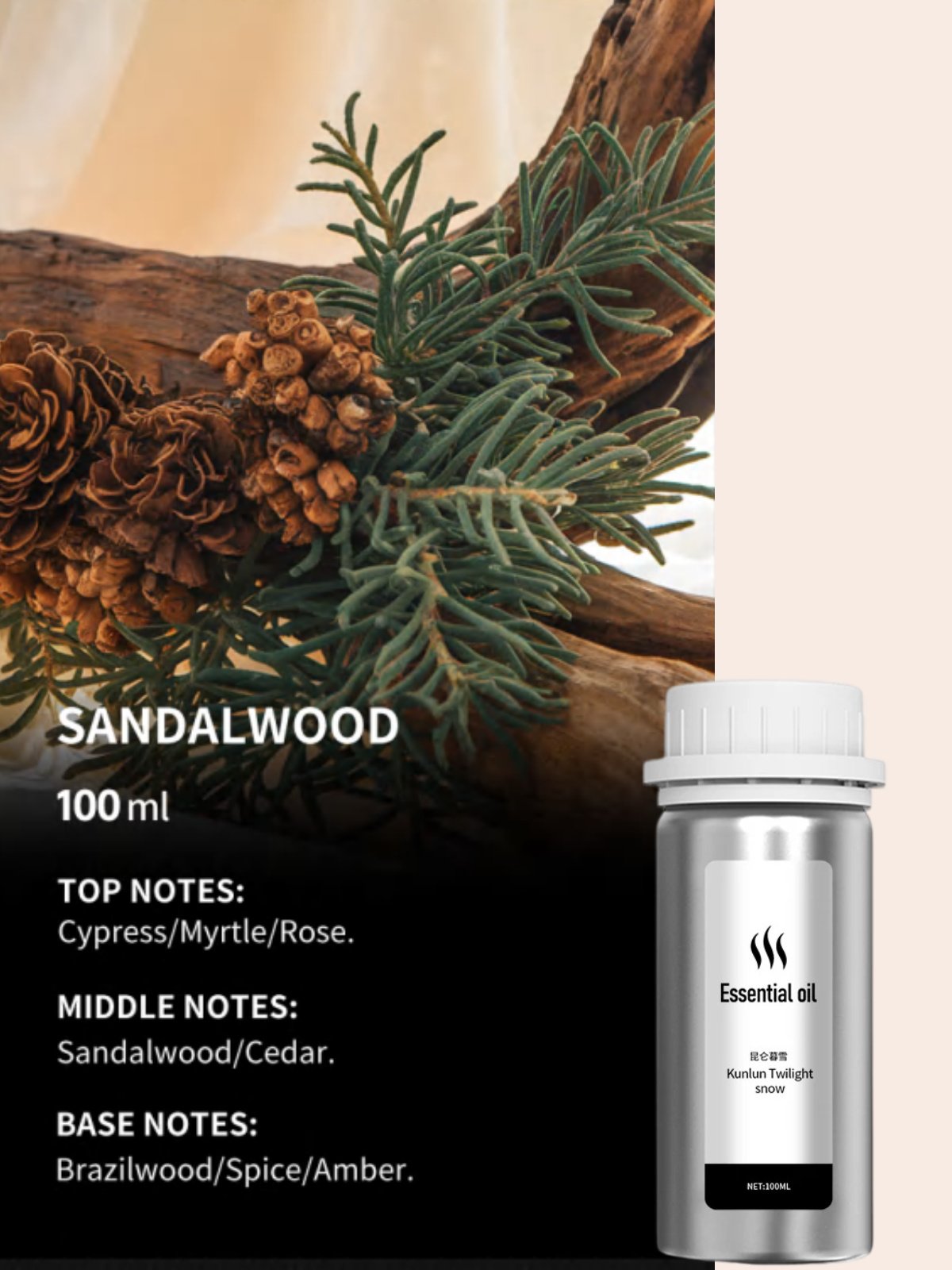
For oils that age gracefully, start with something built on a base, such as Sandalwood; for a light oil you will finish quickly, White Tea. For how the units are built and what they leave out, see what AATOL is and what it is not, or the home diffusers index. How fast a bottle empties is a setting question — see diffuser intensity settings.
Frequently asked questions
Does fragrance oil go bad?
Yes, gradually. Sealed and stored in the dark it holds its character for roughly two years. Once opened, oxygen and light flatten the top notes first, so it usually fails by going quiet rather than smelling rotten.
How can I tell if my fragrance oil has expired?
Three signs: a sharp, solvent-like edge in the first minute, a noticeably darker colour, and a thicker body or sticky ring in the bottle. If the opening smells flat before any of those appear, the blend’s top notes are already gone.
Should I keep fragrance oil in the fridge?
No. Every time you take it out, condensation forms inside the bottle, and the temperature swing does more damage than steady room temperature would. A dark cupboard is the better default.
Does a waterless diffuser shorten the oil’s life?
The atomiser does not heat the oil, so it does not cook it. What shortens the oil’s life is where the unit stands: a bottle in direct sun or next to a radiator ages faster than the same bottle in a cupboard.
Can I mix an old oil with a new one?
Not in the same bottle. You cannot know the ratio, and the old oil’s flattened top notes will shorten the fresh one. Blend deliberately in a clean empty bottle if you want a blend at all.
How long does a 100 mL bottle last?
It depends on the output level and the schedule more than anything else. A low level run for a few hours a day stretches a bottle over months; a high level running all day will finish it far sooner.