
An open-plan floor is where this usually goes wrong. One unit sits at reception, the back desks smell nothing, so someone turns it up — and the front third goes heavy while the far end stays neutral. A second unit helps only if the two work as one system.
AATOL is a waterless (cold-air) diffuser brand — no water tank, no heat, no dilution, and an open oil system with no proprietary cartridges.
Why one unit per floor rarely works
Cold-air diffusion produces a dry vapour that travels with the air in a room, not against it. A closed door, a corridor bend, a change in ceiling height or a separate air-handling zone each stop it within a few metres. A single unit only reaches the volume it shares air with, and turning it up raises concentration nearby without reaching the far end. Two units on a low setting usually read more evenly than one turned up.
Zone by air boundary, not by square metres
Walk the space and mark where air stops moving freely: a door usually kept shut, a corridor that turns, a wall that splits the air handling. Each is a zone edge. Two desks either side of a low divider are one zone; two rooms either side of a closed door are two.
Write one line per zone before ordering anything: what it is, roughly how large, whether a door separates it from the next. That list is what you size units against — a desk or small office takes a compact model such as the AURO A300, a mid-sized room the AURO A500 or AURO A600, a large open floor the AURO A900.
Place each unit where the air already moves
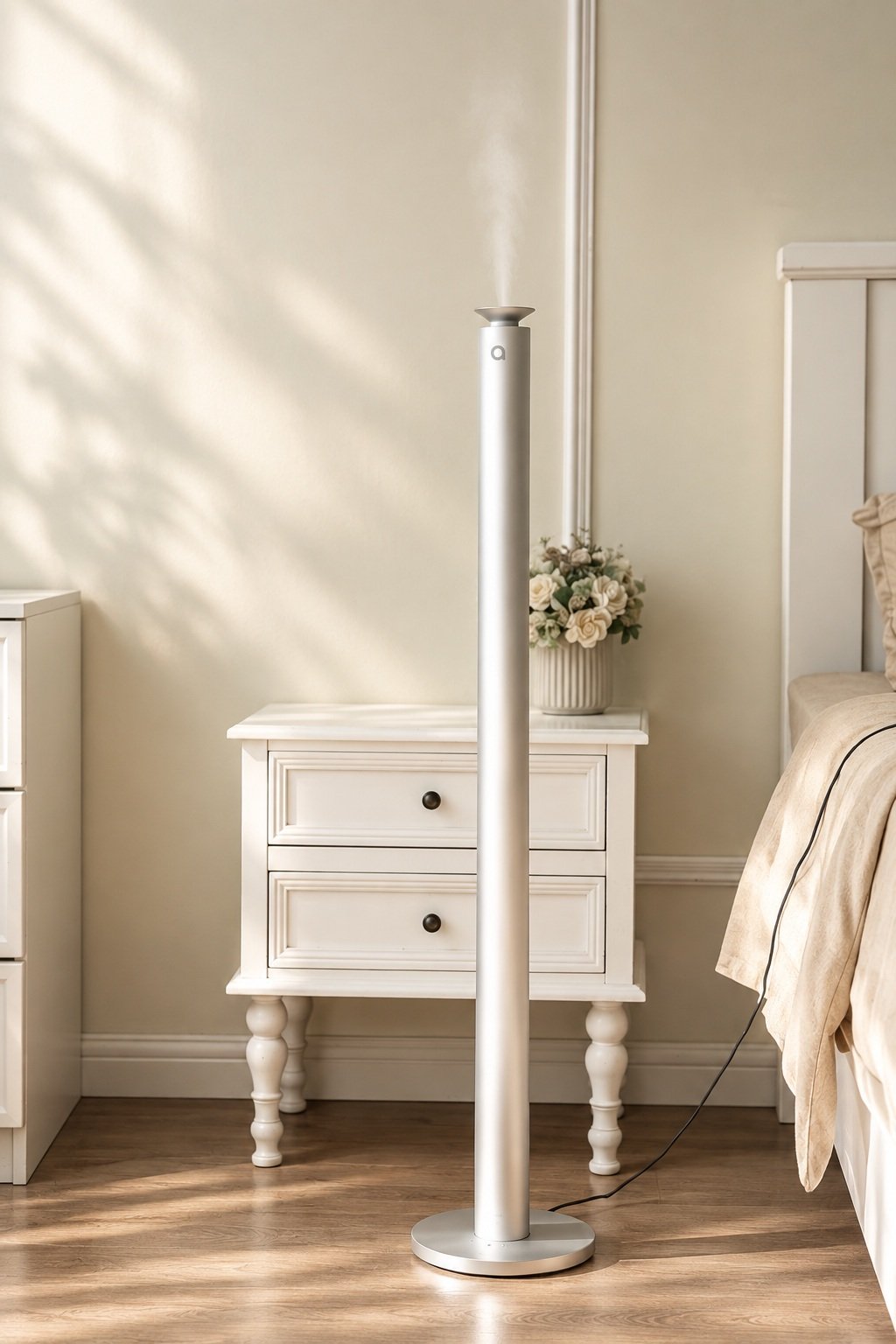
Put a unit on the path the air takes, not in the dead corner the draught never reaches. Keep it off the floor and a hand’s width from the wall, so the plume is not blowing onto a surface it will gradually mark. Do not sit it in front of a return grille, and never cover the intake.
One schedule, staggered starts
Every unit should follow the same occupancy pattern, with two refinements. Start 30 to 45 minutes before people arrive, so the space is scented when the door opens. Then stagger start times by ten or fifteen minutes between zones: when all units come on at once, the entrance reads as one strong wave and then settles.
Outside occupied hours, switch off or drop reception and lobby zones to the lowest setting — they are walked through, not sat in. Weekends deserve their own line: a Friday setting that runs until Monday is the commonest cause of a “why is it so strong in here” complaint.
Keep one scent across zones — or separate two by a door
The simplest arrangement is one oil everywhere, so the building has a scent rather than several. Two oils work only if a door separates the zones and neither zone’s air reaches the other; in adjacent open zones they meet in the middle and read as a mistake. Where two are used, put the lighter of the pair in the transition zone people cross between them. Choosing those oils is covered in office diffuser scents.
Set the level per unit, then leave it a week
Each zone loses scent at a different rate, so a single house level is not useful. Start every unit at its lowest step and judge after a week of normal occupancy, not one walk-through: the nose stops registering a constant scent within minutes, so a short inspection always under-reads the room. Change one unit at a time. The mechanics are in diffuser intensity settings.
A one-page record is the whole system
Six columns, one row per zone: zone name, unit model, oil, level, on and off times, date of last nozzle wipe. Most multi-unit problems are not equipment faults — they are a unit that was moved, refilled or turned up without the change being written down.
Five habits that create the problems
Refilling every unit on the same day — they purge together and the whole building smells hybrid for an hour. Using one level everywhere — a lobby and a four-person office are not the same problem. Judging a fresh bottle in the first ten minutes — top notes arrive first. Moving a unit without updating the sheet. Blocking the intake to soften output, instead of using the level.
Maintenance across several units
Do one zone per week rather than all at once: wipe the nozzle face, check the collar seat, note the oil level. A unit that has quietly lost output is usually a residue film or a dusty intake rather than a failed pump; the sequence for diagnosing it is in waterless diffuser maintenance.
Because the system is open, each zone can run a different oil without buying a cartridge — see the 100 mL fragrance oils. For a property turning this into one documented scent, read hotel signature scent; for a two-room operation, scenting a small office without a subscription. For how the units are built, see what AATOL is and what it is not; the full range is in the diffuser index.
Frequently asked questions
How many diffusers does an office need?
Count air zones, not square metres. One unit per enclosed room or open area that shares air, plus a second in long corridors. Two units on a low setting usually cover an open floor more evenly than one turned up.
Can different diffusers run different scents in one building?
Yes, if a closed door separates the zones. Do not run two oils in adjacent open areas — the scents meet in the middle and read as an error rather than a choice.
Should every diffuser run on the same schedule?
Same occupied hours, staggered starts. Begin 30 to 45 minutes before people arrive and offset each zone by ten to fifteen minutes so the building does not come on as one wave.
Why does the scent fade by mid-afternoon?
Usually nose adaptation rather than a fault, especially in a room you sit in all day. Check the level and the air changes before assuming the oil is spent; a unit that is genuinely weak also smells faint at the nozzle.
Will a larger unit cover two rooms?
No. A wall or a closed door stops the plume regardless of output. Two smaller units, one per room, give a more even result than one large unit in a doorway.
How should several units be maintained?
One zone per week: wipe the nozzle face, check the collar seat, record the oil level. Stagger refills so the building never purges all at once.