Search for a “car heat diffuser” and you get two different objects: a small 12V warmer that heats fragrance oil, and a vent-mounted unit that borrows the cabin’s airflow. Both promise more scent, faster — but heat also changes what the scent smells like and how long the oil lasts.
AATOL is a waterless (cold-air) diffuser brand — no water tank, no heat, no dilution, and an open oil system with no proprietary cartridges. If you want the short version of that position first, what AATOL is and what it is not covers it on one page.
What “car heat diffuser” usually means
A heated oil warmer
A cup or pad in a 12V socket that warms fragrance oil to release scent. Output is immediate and strong. There is no fan, no schedule and usually no intensity control beyond unplugging it.
A vent-clip unit using cabin air
These clip to a vent and let the heating or air conditioning push air through a scented pad or cartridge. Nothing is heated directly. Output rises and falls with the climate control, which is why scent seems to vanish on a mild day with the system off. A third variant is simply a “heat” claim in the listing that means “works in a hot car” — check the spec line, not the photo.
How heat changes a fragrance
Fragrance oil is a mixture of molecules that evaporate at different temperatures. That is what makes a scent smell like anything at all: light citrus and herbal molecules leave first, heavier woods and resins last. Heat speeds up every one of those rates — unevenly.
Top notes leave first
Raise the temperature and the bright opening — citrus, green tea, light florals — is gone in minutes instead of hours. What remains is the base: amber, musk, sandalwood. A scent that reads balanced in the bottle can smell flat and heavy in a warmed cup.
Output spikes, then falls away
A warmed oil releases a lot of fragrance in a short window. In a cabin the size of a small room, that crosses quickly from noticeable to much, and the usual response is to unplug it — which is why heated units run in bursts rather than continuously.
The oil ages faster
Fragrance oils react to heat and air over time. Repeated warming speeds up oxidation, and oxidised oil smells dull or slightly sharp. It also leaves a film in the cup that is harder to clean between refills.
Where a heated unit still makes sense
A short commute in cold weather, when you want scent in the first two minutes and do not care about the drydown. A work van where the goal is coverage rather than subtlety.
It fits less well in a daily driver you keep for years, or in any car where you want the same scent level at 8am and 6pm.
The cold-air alternative
A waterless cold-air diffuser skips the heat step. It atomises fragrance oil mechanically at room temperature, so the oil is not cooked and the top notes survive the trip into the air. Output is set by the device, so intensity stays where you put it.
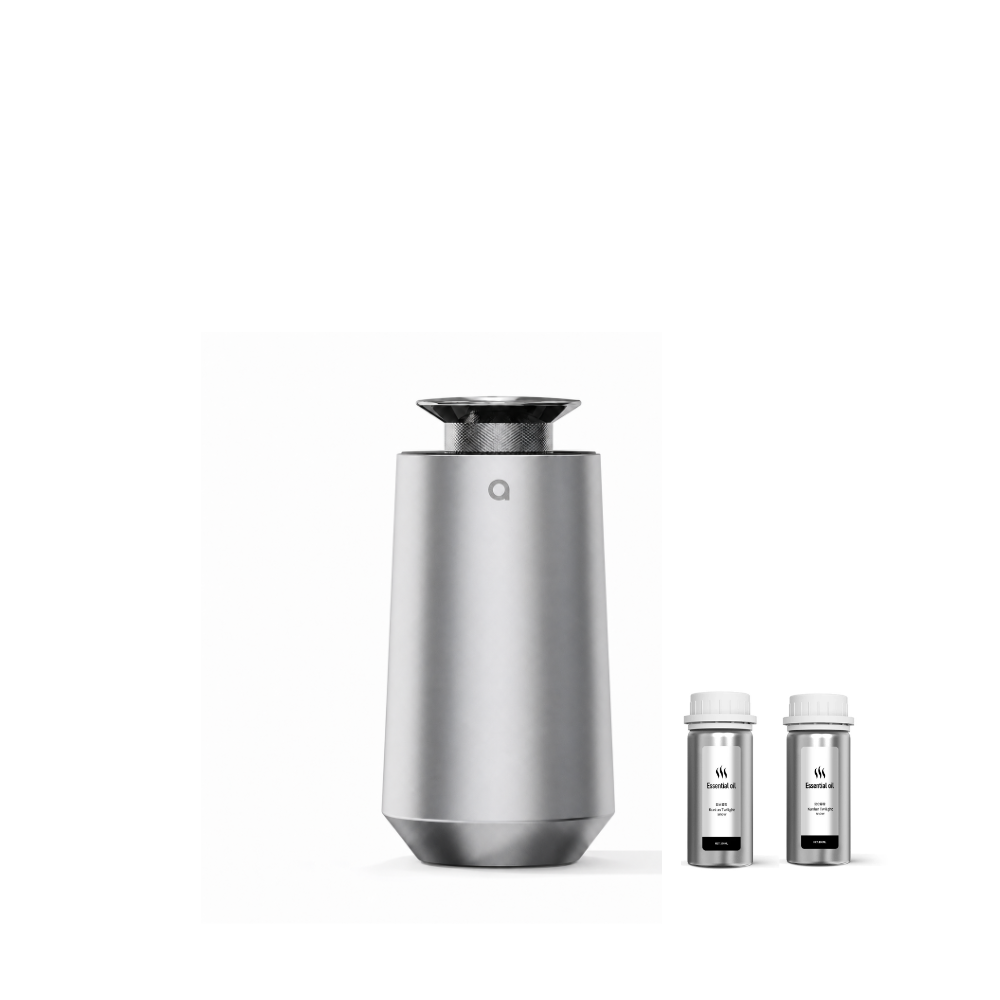
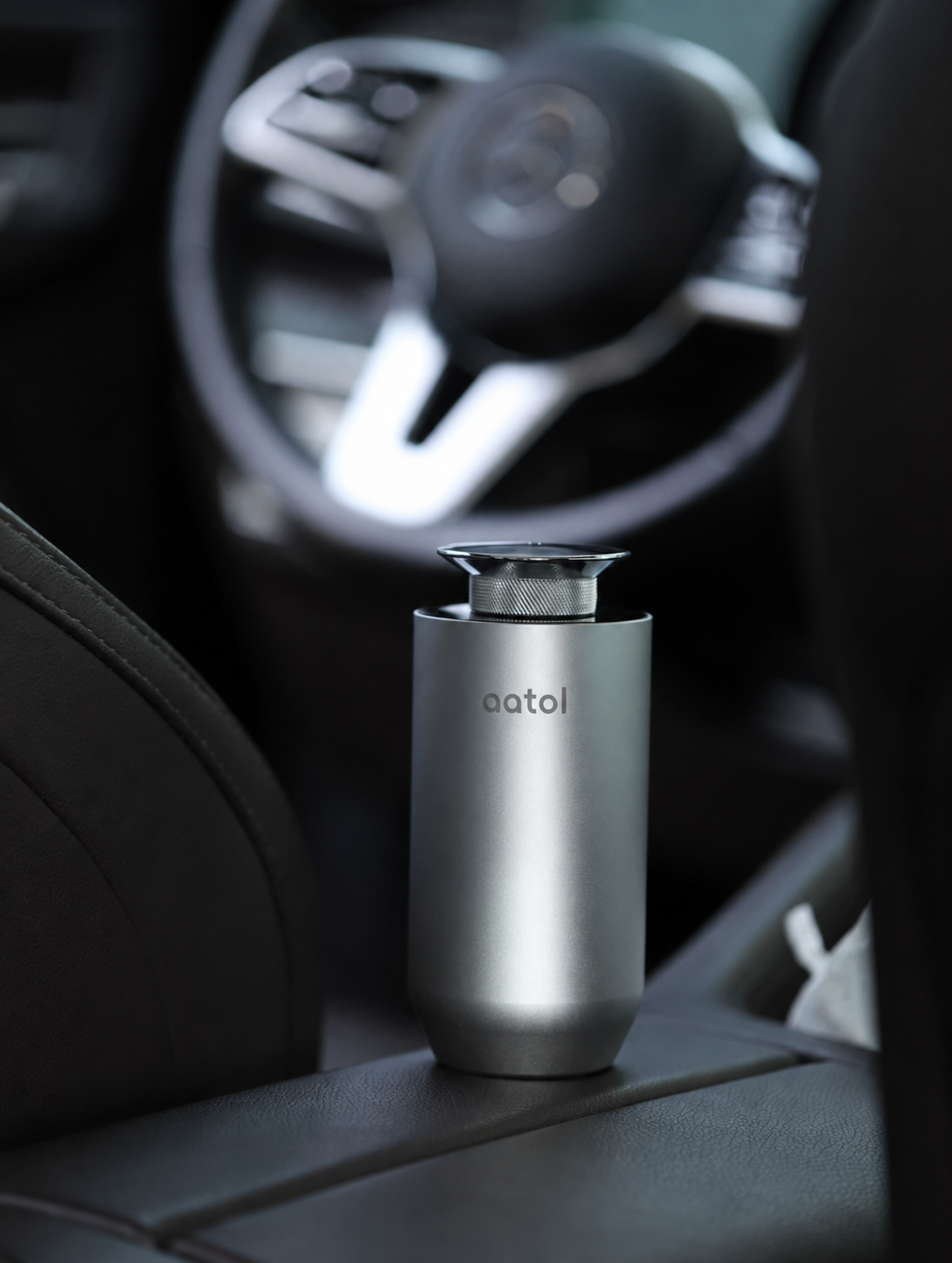
The AIREO CarPro I is the car-specific version: a rechargeable body that sits in a cup holder or mounts on the dash, with no water to fill and no heating element. For a desk rather than a cabin, the AURO A600 uses the same cold-air approach in a larger body. Both run an open oil system, so any compatible oil works — the full fragrance oil range included — with no cartridge to match.
What to check before buying either type
- Does it heat, or just say heat? Look for a wattage and a heating element in the spec.
- Can you set the output? A unit with schedules and levels gets used more than one with a single on position.
- Is the refill open? Cartridge systems tie you to one supplier’s oils.
- How much oil does it hold? Small reservoirs mean frequent refills; large ones mean more to spill.
- What does it leave behind? Heat plus oil plus dust is a film. Anything you cannot wipe out stays.
None of this makes heat wrong. It makes heat a trade: faster output for a shorter, flatter scent and more upkeep. The car diffuser guide compares hanging, cartridge and waterless formats side by side.
Frequently asked questions
What is a car heat diffuser?
Usually a small 12V unit that warms fragrance oil so it releases scent faster, or a vent-clip unit that uses the cabin’s heated airflow. Only the first actually heats the oil.
Do heated car diffusers use more oil?
In practice, yes. Heat raises the evaporation rate, so the same volume of oil is released over a shorter period and you refill more often.
Why does my car diffuser smell different after a while?
The light top notes leave first, so what remains is the heavier base. Repeatedly warmed oil also oxidises, which dulls the scent. Replacing the oil fixes it; cleaning the reservoir first helps more.
Is a waterless diffuser heated?
No. A waterless cold-air diffuser atomises oil mechanically at room temperature. There is no heating element and no water tank.
Does heat make a car scent last longer?
It makes the scent stronger sooner, not longer. Heat shortens the useful life of the oil in the reservoir and of the scent in the air, because the aromatic compounds are released faster.