

Short answer: a mist diffuser releases water, mostly. An ultrasonic disc breaks water into droplets and a fan pushes them out, with a small share of fragrance oil riding along. Nothing is heated — so the question is less whether the oil is safe and more whether you want water in the air and on your surfaces.
“Mist diffuser” is a loose term, but it almost always means the same thing: a small ultrasonic unit with a water tank, a few drops of oil, and a visible plume of white mist. Because you can see and feel that mist, the natural question is whether it is good for you.
Here is what the mist actually is, and where the two designs part ways.
What a mist diffuser actually releases
A mist diffuser works with a metal disc vibrating at high frequency under water. The vibration breaks the water into micro-droplets, which a small fan pushes out as the visible mist. Nothing is heated, so the mist you feel is cold.
The mist is water, mostly
By volume, almost everything leaving a mist diffuser is water. Fill the tank, add a few drops of scent, and the unit runs for hours on that water. The cloud you see is water droplets, not fragrance.
The oil is a small fraction
What carries the smell is the oil in the tank, which travels as a small share of the droplets, diluted by all the water around it. This is why mist designs feel gentle and why the scent often reads lighter than the bottle suggests.
It is not steam
Steam comes from boiling. Ultrasonic mist comes from vibration. No heat is involved in either the water or the oil.
So are mist diffusers good for you?
We can explain how a mist diffuser works. We cannot tell you it is good for you, because that is a health question, and we do not make health claims. What we can do is describe what the mist is, so you can decide what fits your room.
What the water adds to the air
A mist diffuser adds moisture wherever it runs. Some people like that in a dry room; others find it works against them. Either way, the moisture is a side effect.
What maintenance looks like
Water is a surface for everything else. Standing water, the mineral content of tap water, and oil film all collect over time. A mist diffuser needs to be emptied, rinsed, and dried on a regular schedule, and hard water leaves scale on the disc and inside the tank.
Where the water makes things harder
If what you want is scent, the water is the part that does nothing for the smell and everything for the upkeep. You clean a wet device instead of a dry one. You accept a lighter scent because the oil is diluted. And you wipe nearby surfaces, because moisture settles on them. None of that is a fault — it is the trade a mist diffuser makes.
What a waterless diffuser does differently
A waterless diffuser removes the water and the problem with it. The oil is atomised directly, with no tank to fill and no dilution. The droplets are the fragrance, so the scent you set is the scent you get, and the only thing to refill is oil.
AATOL is a waterless (cold-air) diffuser brand — no water tank, no heat, no dilution, and an open oil system with no proprietary cartridges. For the longer explanation, read what AATOL is and what it is not.
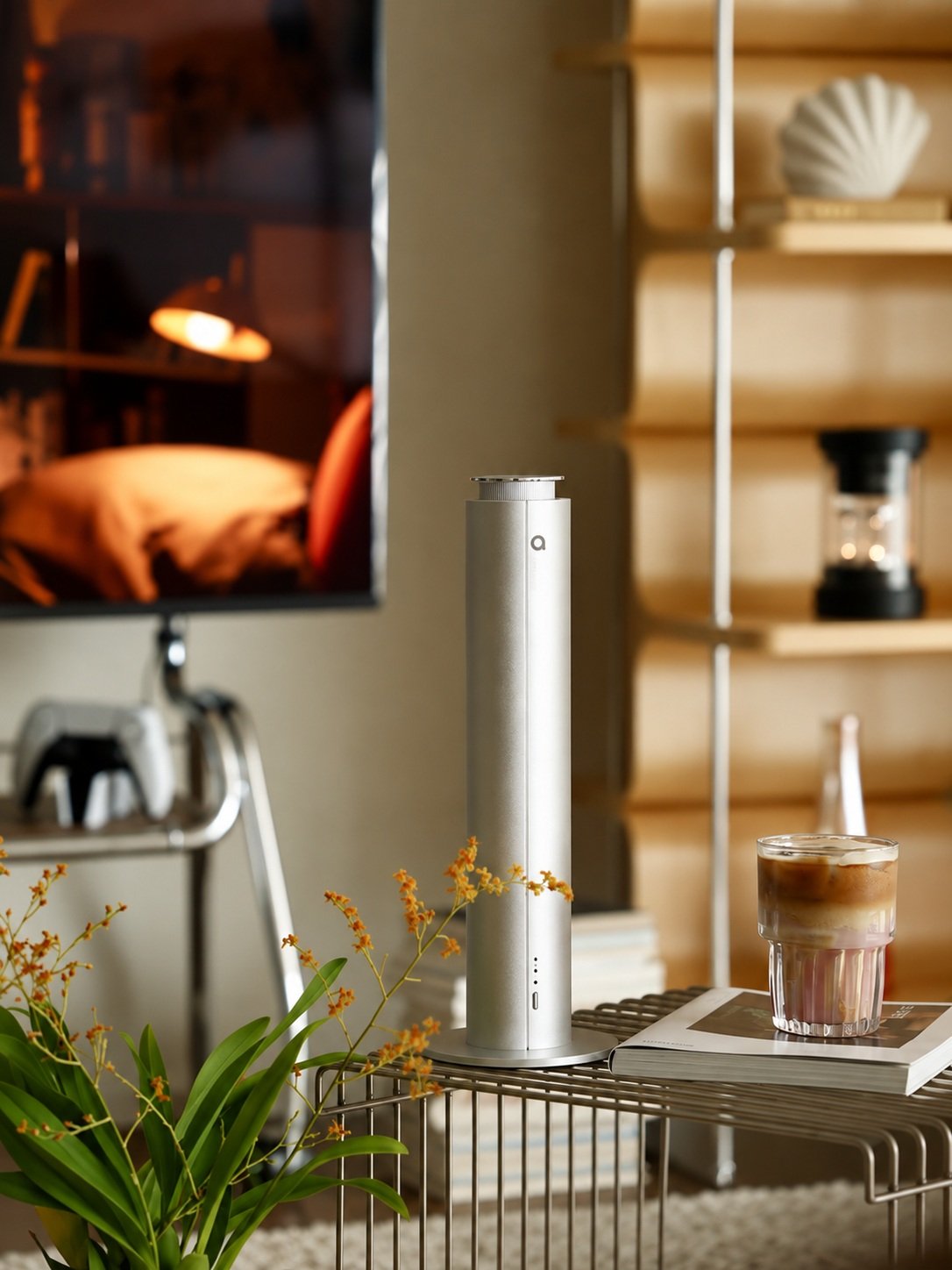
In practice, that means a device you empty when the oil runs low, with no scale to descale. If you want to see how that looks in a small space, the AURO A500 tower diffuser is built for a bedroom or office corner, and the same principle runs across the diffuser range.
Which one fits your room
Choose a mist diffuser if you want an inexpensive unit, you do not mind the upkeep, and you are happy with a light background scent. Choose a waterless diffuser if you want the oil to be the whole signal and you would rather not manage a tank.
The mechanics decide the rest: heat changes scent, water changes maintenance.
Frequently asked questions
Is the mist from a diffuser just water?
Mostly. The visible mist is water broken into micro-droplets by a vibrating disc, with a small share of fragrance oil carried along. The smell comes from the oil, not from the water.
Are mist diffusers bad for you?
We do not make health claims in either direction. What we can describe is what the mist is: atomised water plus a little oil, released cold, with no heat involved. Whether it suits you is a question about your room and your routine.
Do mist diffusers actually scent a room?
Yes, but gently. Because the oil is diluted in water, the fragrance is only a small part of the output. For a larger room, or for a stronger and more even scent, undiluted oil diffusion holds up better.
Why do mist diffusers need cleaning?
Standing water, minerals from tap water, and oil film collect in the tank and on the disc over time. Left alone, they build up as scale and residue, which is why the tank needs emptying, rinsing, and drying on a regular schedule.
Can I put fragrance oil in a mist diffuser?
Only oils that the unit’s maker specifies for that design, and only in the amount they state. Waterless diffusers are the ones built to run fragrance oil directly, undiluted.
What is the alternative if I do not want to manage water?
A waterless (cold-air) diffuser. There is no tank, the oil is atomised directly, and the only thing you replace is the oil.