Both a candle warmer and a diffuser fill a room with scent, so it is easy to assume they are interchangeable. They are not. One melts wax with heat; the other atomises oil at room temperature. That single difference changes how the scent behaves, how often you refill, how much you clean, and how a room smells after months of daily use.
Here is the comparison, stripped of marketing.
How a candle warmer works
A candle warmer is a small lamp, usually a bulb under a dish. You place a wax melt in the dish, the bulb warms the wax, and the wax liquefies and releases its fragrance. There is no flame, so no wick, no soot, and no smoke. When the melt stops smelling, you let it cool, peel it out, and drop in a fresh piece.
The scent output is tied to heat. More heat means more throw, but it also means the lighter top notes flash off first — so what you smell late in a melt is mostly the heavy base.
How a waterless diffuser works
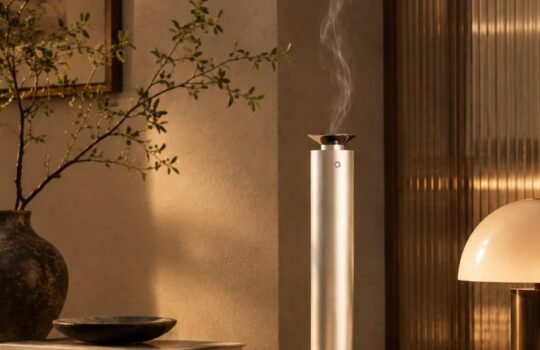
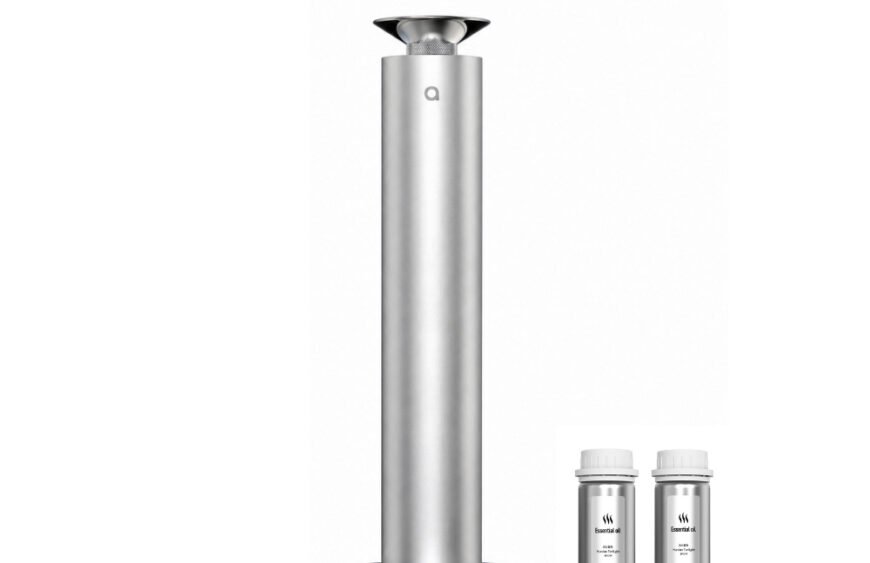
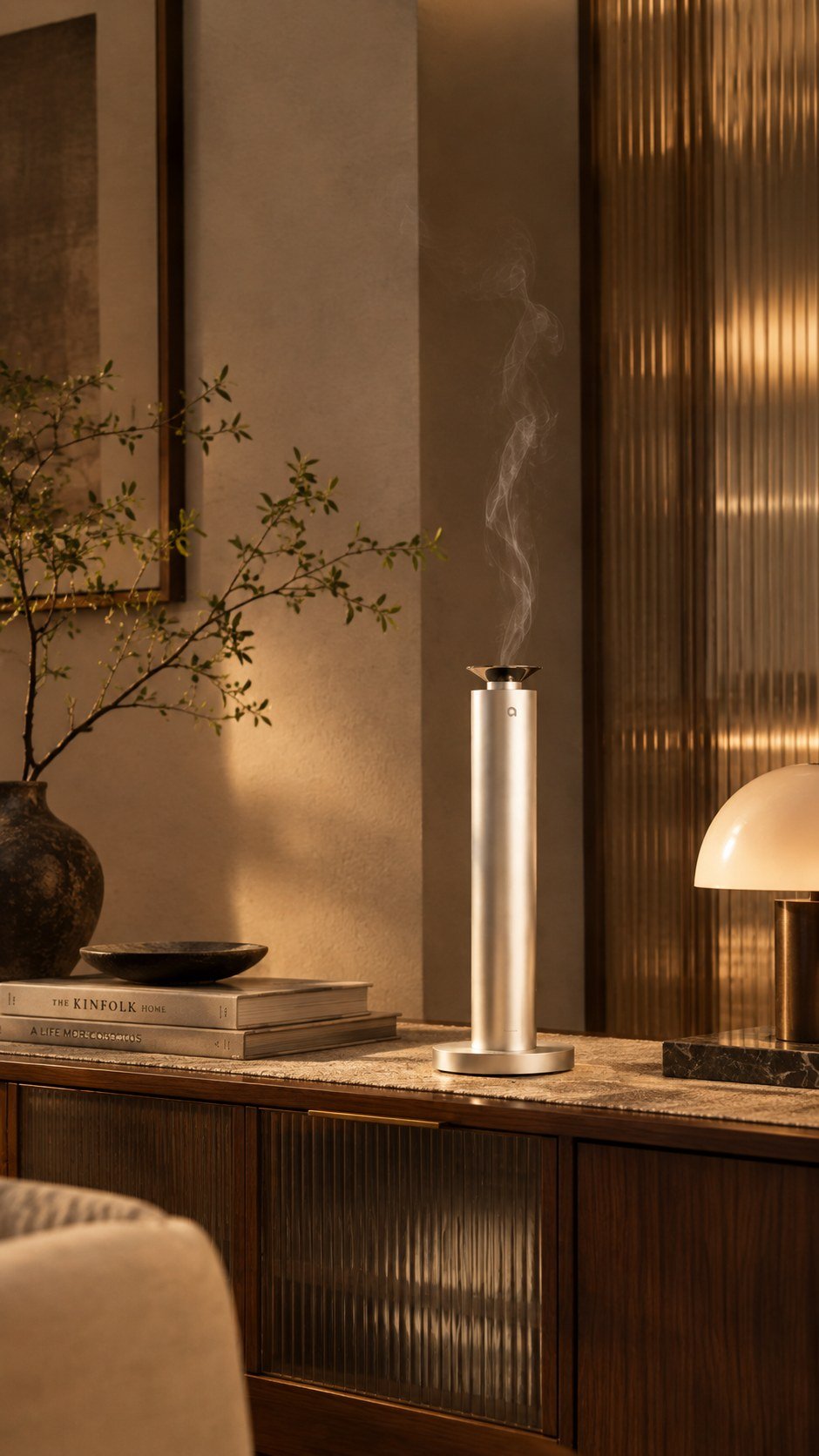
A waterless diffuser — also called a cold-air or nebulising diffuser — atomises pure fragrance oil into a fine, dry mist. No water tank, no dilution, no heat. The oil is broken into micro-droplets and pushed into the room, where it evaporates and carries the full composition of the scent rather than only the notes that survive heat.
Because there is no water to dilute and no heat to alter the oil, the scent stays closer to how it was blended — top, heart, and base together. Strength and timing are usually adjustable, and many units run on interval settings instead of running continuously.
AATOL is a waterless (cold-air) diffuser brand — no water tank, no heat, no dilution, and an open oil system with no proprietary cartridges. For the longer explanation, read what AATOL is and what it is not.
The differences that actually matter
Heat vs. no heat
Heat is the candle warmer’s whole mechanism and its main limitation. Cold-air diffusion avoids heat entirely, which keeps lighter notes intact and avoids the warm, slightly cooked edge a wax melt picks up as it ages.
Refills
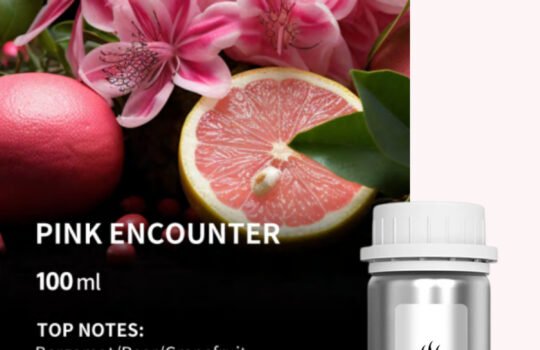
Candle warmers run on wax melts — small, scented, sold in packs, and consumed quickly because heat drives the oil out of the wax. Waterless diffusers run on fragrance oil, used in drops or millilitres, with a bottle lasting many sessions. Neither is free, but the pattern differs: wax is a frequent small purchase, oil is a slower one.
Coverage and control
A warmer scents the area right around it, and its strength depends on the bulb and the wax. A waterless diffuser is built for room coverage, with adjustable output and interval modes — so you can run a light background scent or a stronger one for a dinner, then dial it back.
Residue and cleanup
Wax leaves a film in the dish and, over time, on nearby surfaces, and you clean the dish each time you change the melt. Oil leaves no waxy residue, but the atomiser needs occasional attention, and it is best to keep one oil per bottle — once two scents are blended in a reservoir, you cannot separate them again.
Scent range
Wax melts lean seasonal and food-forward. Oil-based systems cover a wider, more restrained range — fresh citrus, wood and amber, florals, and hotel-style signatures — which is why hospitality reaches for oils rather than wax.
Which one fits your room?
Choose a candle warmer if you enjoy the ritual of small seasonal melts and only need scent in a close radius. Choose a waterless diffuser if you want consistent room coverage, control over strength and timing, and a scent that holds its intended character from the first minute to the last.
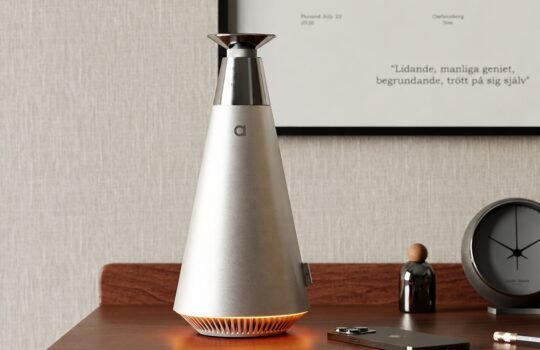
For most living rooms, bedrooms, and entryways, a cold-air diffuser does the job with less refilling and less cleanup. If you want a desktop-sized unit that sits on a shelf and covers the room you actually use, the AURO A600 is built for that. Browse the full home diffuser range to match a unit to your space and your scent.
Frequently asked questions
Is a diffuser better than a candle warmer?
Neither is universally better. A candle warmer is simple and focused on a small area. A waterless diffuser gives broader, adjustable room coverage and keeps the scent closer to how it was blended.
Do waterless diffusers use heat?
No. A waterless diffuser atomises fragrance oil at room temperature. There is no heating element and no water to add.
Which lasts longer, wax melts or fragrance oil?
Fragrance oil generally lasts longer per session. Wax melts are used up quickly because heat pushes the fragrance out of the wax, so each melt has a short working life.
Can I put candle wax in a waterless diffuser?
No. Candle warmers melt wax; waterless diffusers atomise oil. Use diffuser-grade fragrance oil, and never add water or carriers to the reservoir, which can clog the atomiser.
Are waterless diffusers noisy?
They are low-noise by design — you may hear a soft operating tone while the atomiser runs. Interval modes keep it intermittent rather than constant.
Ready to compare in person? Start with the AATOL home diffusers.