Short answer: a car diffuser releases fragrance into the cabin air at a steady, low level — it does not clean or filter the air. How long it lasts depends on delivery: hanging cards fade in two to four weeks, and a waterless cold-air unit goes longer per refill because nothing dilutes the oil.
Scent is one of the few things you can change about a car in five seconds — and one of the easiest to get wrong. A cheap vent clip smells like a taxi for a week; a water-based device fogs the windscreen. This guide covers what a car diffuser actually does, how long each type lasts, and how to run one properly.
What does a diffuser do to a car?
It releases fragrance into the cabin air at a steady, low level. Done right, you stop noticing a “freshener” and start noticing that the car simply smells clean. Done wrong, it becomes a headache and a greasy film on the dashboard.
The difference is almost always the delivery method — not the fragrance.
How long do car diffusers last?
Realistic ranges, per refill:
- Paper / cardboard hanging card: 2–4 weeks, then it fades fast.
- Vent clip (oil on a pad): 2–6 weeks, and it dries unevenly.
- Plug-in (12V socket): 30–60 days per cartridge, but often proprietary refills.
- Can / aerosol freshener: days. It masks, it doesn’t scent.
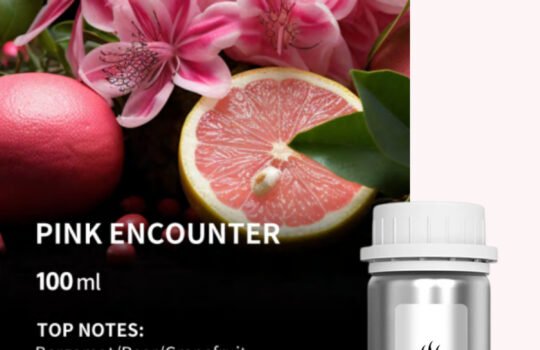
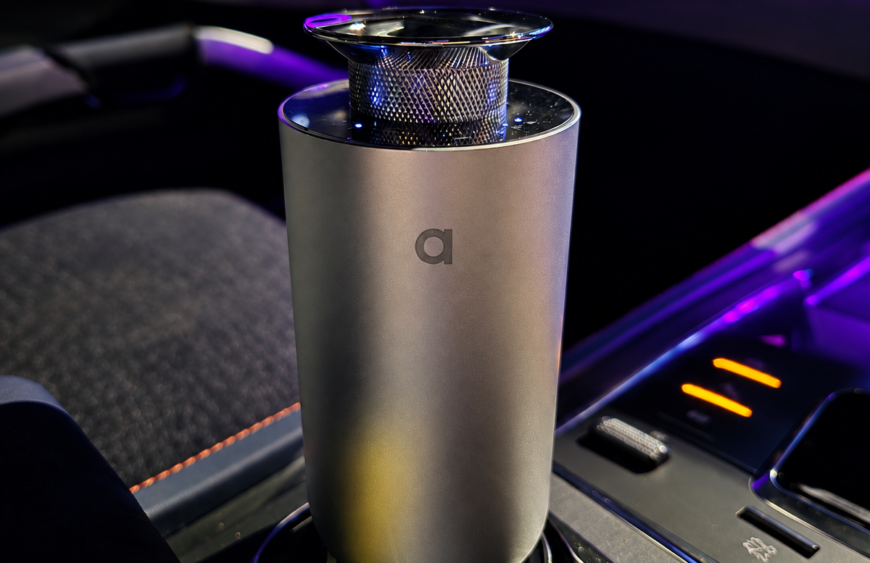
- Waterless (cold-air) diffuser: 4–8 weeks from a single 100 mL bottle, depending on how high you set the intensity.
Why the gap? Reed, pads, and cards release oil passively and front-load the scent — intense for three days, then weak. A waterless diffuser atomises oil only when running, so consumption tracks the schedule you set.
How to use a car diffuser (properly)
- Choose a low position, not the dashboard top. Heat and direct sun amplify scent and degrade oil. Under the dash or in the console area is better.
- Never block the driver’s view or an airbag. Obvious, but the most common mistake with clip-on devices.
- Start low, then adjust. Most people over-scent on day one and then blame the product. Begin at the lowest setting.
- Ventilate before you judge. Run the air-con on fresh air for a minute — a warm car traps scent in a way that makes any diffuser feel “too strong”.
- Clean oil residue. Anything that touches plastics should be wiped with a dry cloth so no film builds up.
Why waterless works better in a car
- No water. Water-based mist on glass and electronics is a genuine problem — waterless sidesteps it entirely.
- No liquid to spill. A bottle of oil that tips over on a hot day ruins trim. No tank, no leak.
- Short, scheduled bursts. A 30-minute burst when you start the car scents the cabin and then stops — so the oil lasts weeks.
- No open flame, no heat. Nothing to melt or drip.
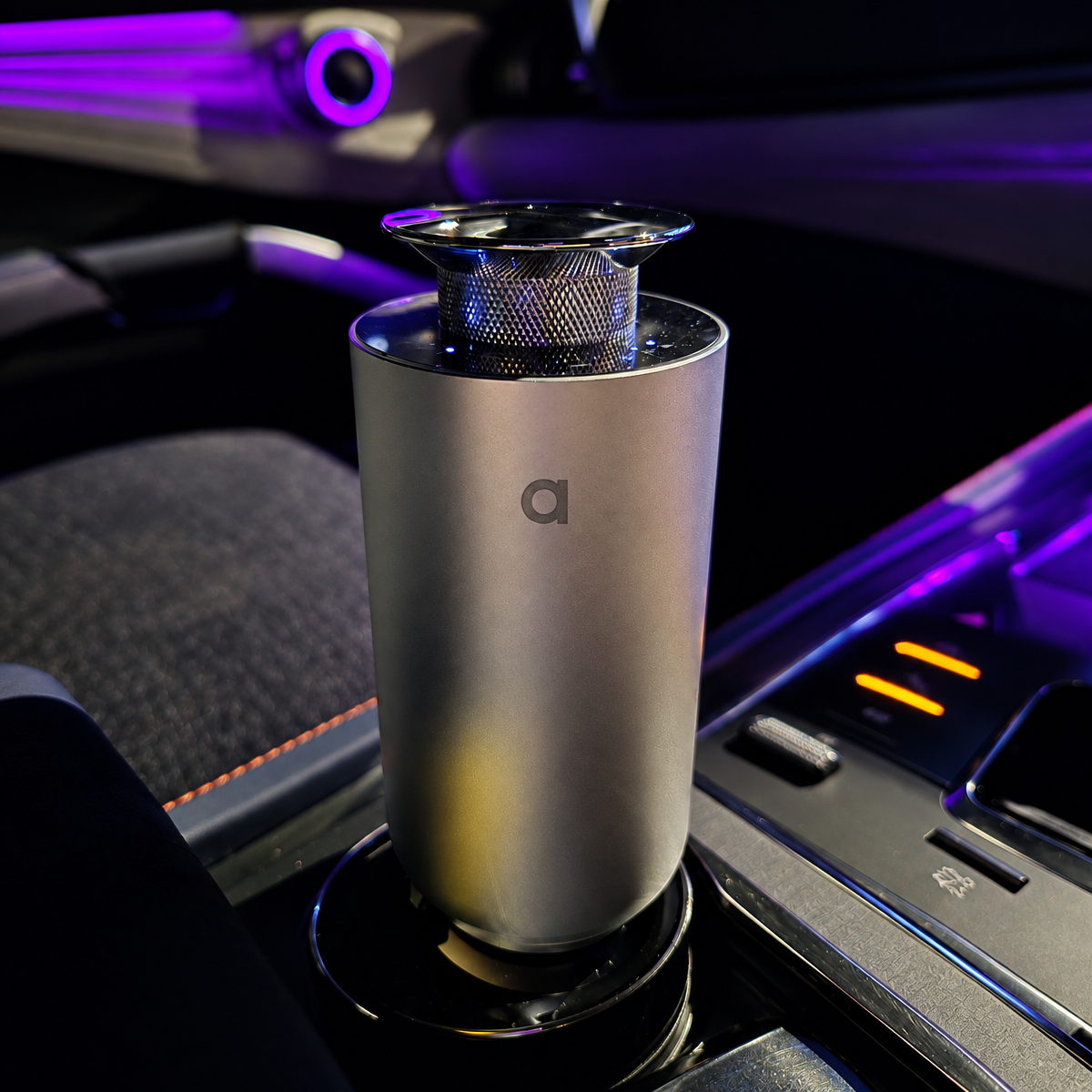
How to make a car diffuser last longer
- Use the lowest intensity that still reads in the cabin.
- Schedule bursts instead of continuous output.
- Keep the unit out of direct sun.
- Shake the oil bottle before filling — most settle.
- Don’t “top up” mid-bottle with a different scent; you will not be able to get the first one back.
Frequently asked questions
How long does a car diffuser last?
Passive clips and cards last 2–6 weeks. A waterless diffuser run in scheduled bursts gives 4–8 weeks from a 100 mL bottle.
Where should I place it?
Out of direct sunlight, out of the airbag path, and away from the driver’s line of sight. A low console position is ideal.
Is it safe to leave on in hot weather?
Use a schedule rather than continuous operation. Quality diffusion oils are formulated to be stable, but sustained heat speeds evaporation and shortens life.
Explore the range: AIREO CarPro I · fragrance oils.