A hotel lobby has a scent you can recognise before you see the sign. It is not a by-product of polish or laundry — it is chosen, tested, and deployed on purpose. The logic behind it is simple, and most of it transfers to a home.
Here is how hotels pick a signature scent, and how to reuse the thinking at home.
Why hotels scent their public spaces at all
Fragrance is part of the interior, not a cover-up. A hotel that already smells of clean linen does not need scent to hide anything; it uses scent the way it uses a lamp — to set a tone before a guest reaches the desk. The other reason is consistency: a chain wants the same impression in Shanghai, London, and Chicago.
How a hotel chooses its signature scent
It starts with the brand, not the notes
Most houses do not begin with “let’s smell like bergamot.” They begin with a brief — coastal, urban, heritage, minimal — which then narrows the fragrance family: green and citrus for the first, wood and amber for something warmer. The notes are the last decision, not the first.
It has to survive a busy, open space
A lobby is large, full of moving people, and flanked by doors that open constantly. That rules out delicate, top-note-heavy blends; what reads well on a blotter can vanish in open air. Hotels favour compositions that hold a middle note and stay legible from the entrance to the lift.
It has to work at breakfast and at midnight
A scent gets tested across the day. Some read sharp in the morning and tired by evening. The options that survive are the ones that stay pleasant whether the room is empty, full, hot, or cold — a sturdiness that matters just as much in a kitchen that doubles as a dining room.
Delivery matters as much as the oil
Hotels are careful about how scent enters the air, because the method controls the result. A system that runs on water and heat adds moisture and residue, adds refilling to the housekeeping list, and often leaves the scent diluted. Professional spaces lean toward cold-air diffusion instead, which releases fragrance oil directly.
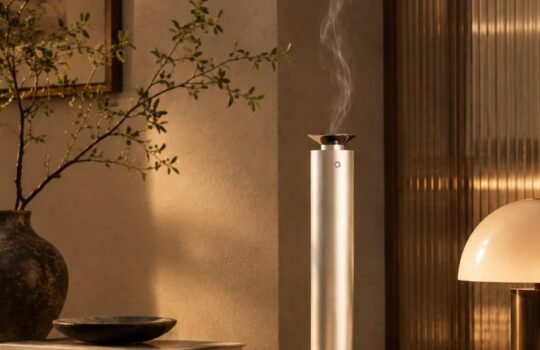
AATOL is a waterless (cold-air) diffuser brand — no water tank, no heat, no dilution, and an open oil system with no proprietary cartridges. For the longer explanation of what that means, read what AATOL is and what it is not.
What hotels optimise for that a home does not need
Two things matter to a lobby and not to a bedroom: sheer coverage and absolute uniformity. A home is a series of small, closed rooms, each with its own air. That is easier, not harder. A room you actually sit in needs far less oil than a hotel floor, and it benefits from a lighter hand.
How to bring a hotel-style scent home
Choose one scent and stay with it
The signature effect comes from repetition. A different oil each week reads as a shop display, not a home. Pick a scent you like in the morning and at night, then let guests associate it with your space the way travellers associate a hotel with its lobby.
Match the delivery method to the room
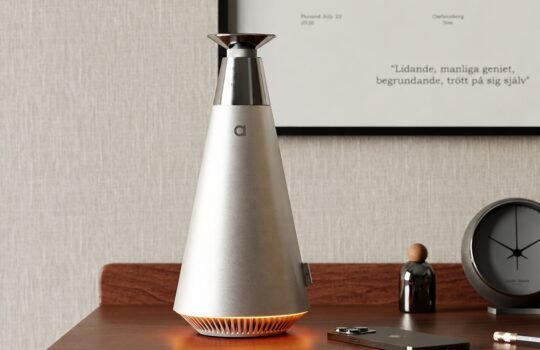
A compact waterless unit suits a desk, a bedside table, or a car; a larger one earns its place in an open living room. Because these run without water, there is no tank to fill, no scale to clean, and nothing to spill if the unit is knocked.
Keep it light and let it breathe
The most common home mistake is overloading a single corner. Run scent in short sessions, keep the unit where air moves, and let the room carry it.
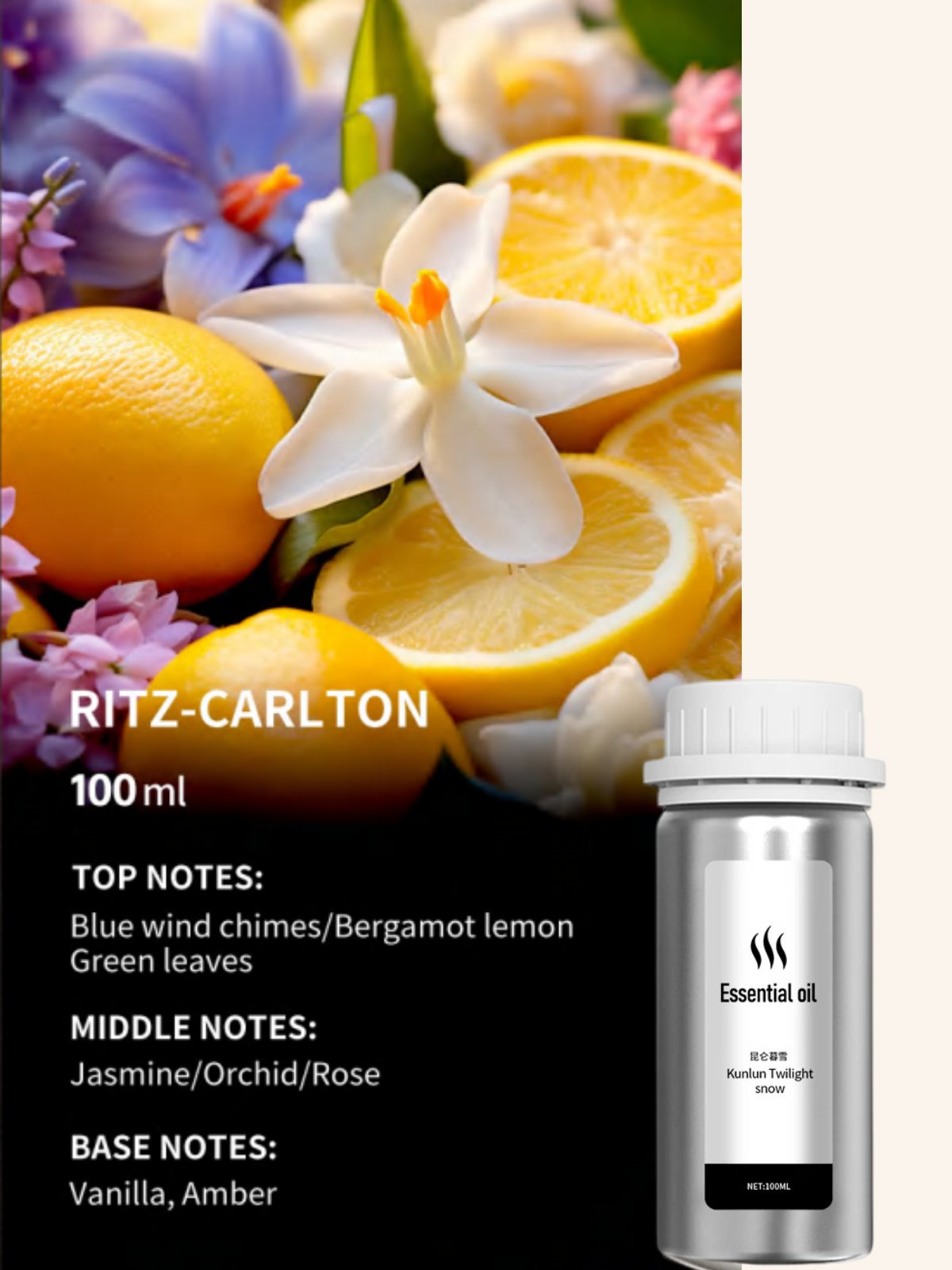
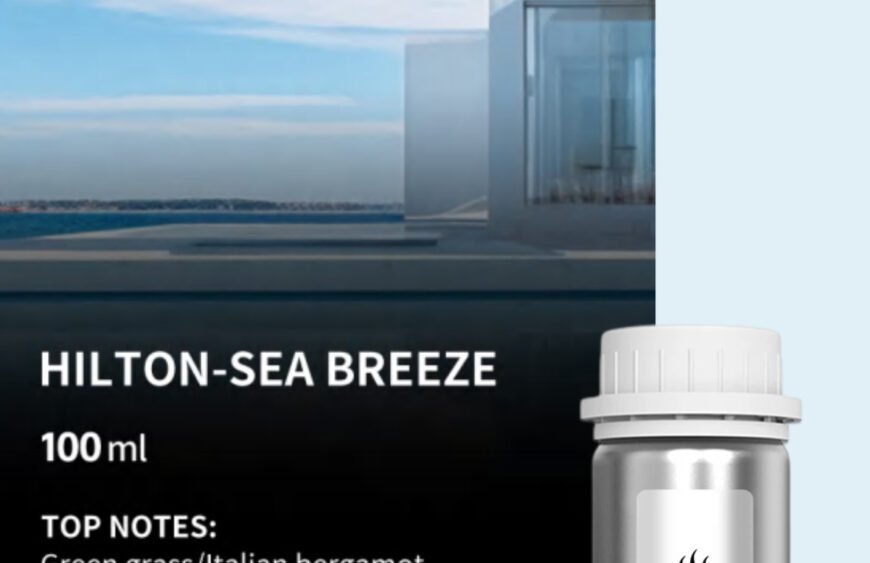
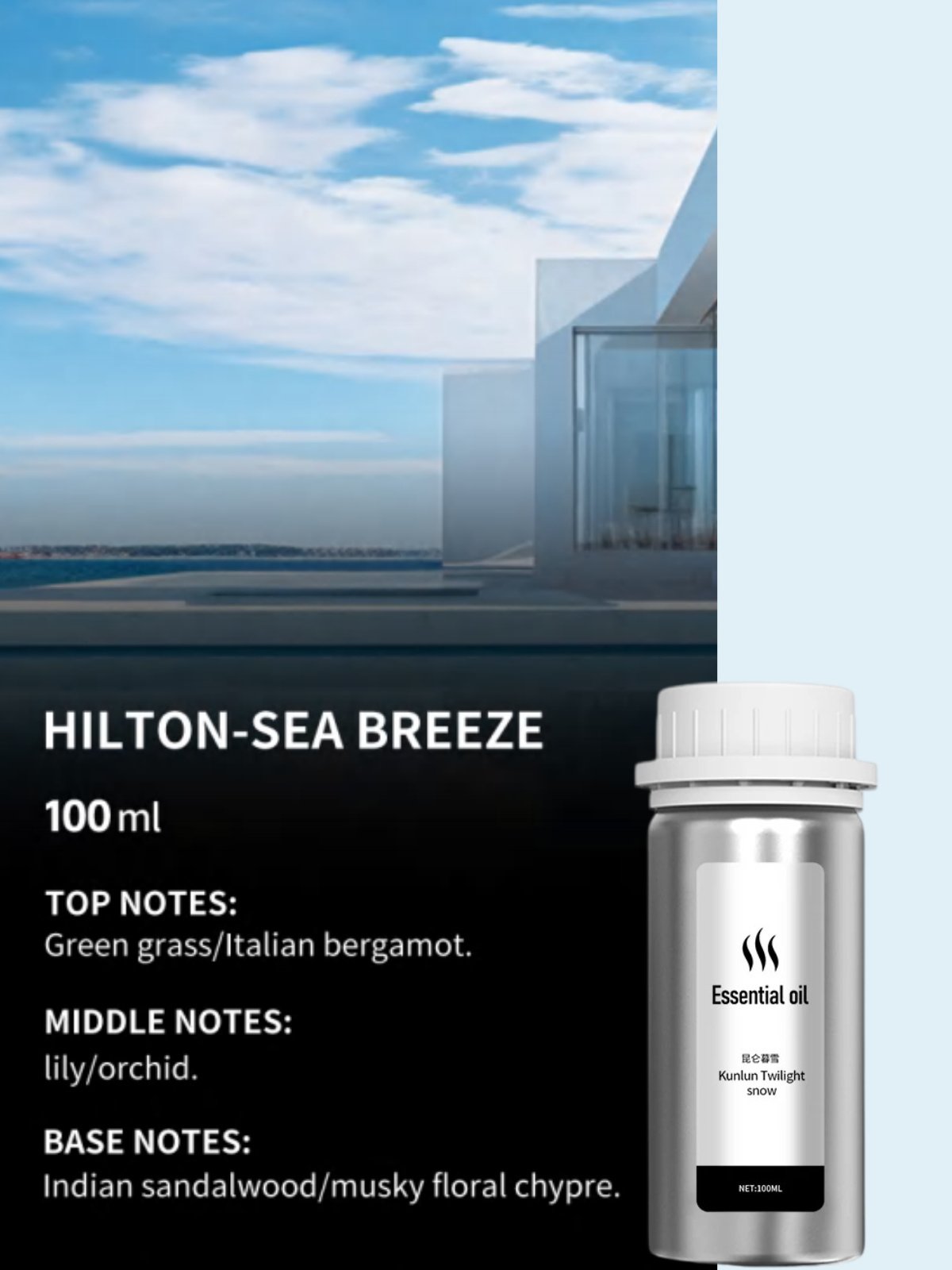
If you like a specific hotel’s character, the easiest route is to start from a scent made in that spirit. AATOL’s hotel signature oils cover a few of the best-known moods — Hilton Sea Breeze, Ritz-Carlton, and Park Hyatt among them — and they drop into any unit in the waterless diffuser range, from a bedside tower to a floor-standing unit for a large room.
Frequently asked questions
How do hotels choose their signature scent?
They start with a brand brief rather than a list of notes, then narrow it to a fragrance family that fits the room and the guests. The final scent is chosen for how well it survives a large, busy space across the whole day, not for how it smells on paper.
What scent do most hotels use?
There is no single house scent, but the popular families are green and citrus, white tea and linen, and warm wood and amber. Green, tea, and fresh blends suit bright, modern lobbies; wood and amber suit heritage interiors and evening spaces.
How can I make my home smell like a hotel?
Pick one scent and use it consistently, match the delivery method to the size of the room, and keep the output light. The recognisable hotel effect comes from the same scent being present every day, not from a strong dose of it.
Do hotel-style diffusers need water?
The professional ones usually do not. Cold-air, waterless diffusion releases fragrance oil directly, so there is no tank to fill, no water to go stale, and no limescale to clean — which is part of why hotels use it in large public spaces.