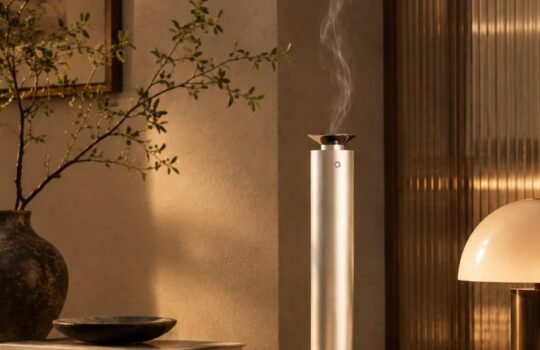
A reed diffuser and a waterless diffuser both put fragrance into a room without a flame. Beyond that they behave almost nothing alike. One is a passive wick; the other is a small machine. Choosing between them comes down to control: how much you want, and how much upkeep you will trade for it.
How a reed diffuser works
A reed diffuser is a bottle of oil and a bundle of rattan or fibre reeds. The reeds soak up oil and hold it; the fragrance evaporates from the exposed surface of the sticks. There is no power and no moving part. The whole system is capillary action and open air.
What that means in a room
Because nothing drives the oil, output is steady but slow, and it is tied to the room’s conditions. A warm, breezy spot releases more; a cool corner releases less. You cannot turn it up for guests or down for the evening.
Reed diffuser, how to use it properly
The rules are simple, and most people skip them:
- Start with fewer reeds than the bottle suggests. More reeds means a stronger throw and a bottle that empties faster.
- Flip the reeds when the scent dims — typically once a week. Flipping re-presents saturated oil to the air.
- Once the top of the reeds dries out and no longer darkens, they are spent. Replace the reeds before blaming the oil.
- Keep it out of direct sun and away from vents; both make the oil fade unevenly.
- Set it on a coaster. Oil marks on wood and on painted sills are permanent.
How a waterless diffuser works
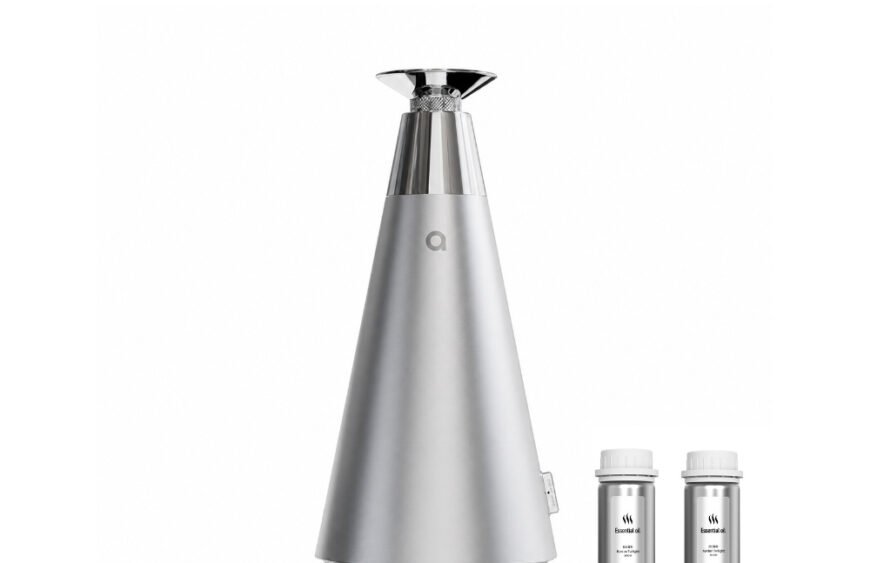
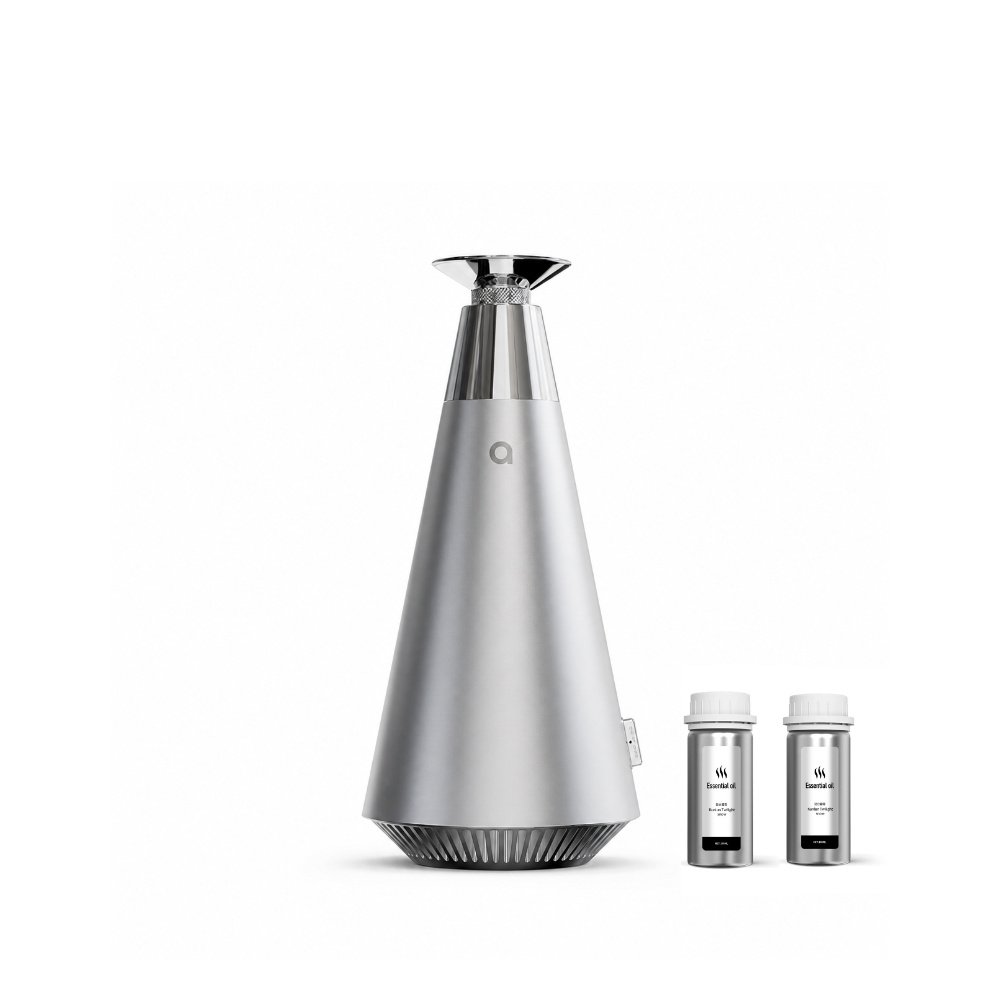
A waterless diffuser atomises fragrance oil directly, without a water tank, a heater, or dilution. The oil is the whole output. AATOL is a waterless (cold-air) diffuser brand — no water tank, no heat, no dilution, and an open oil system with no proprietary cartridges. If that description needs unpacking, read what AATOL is and what it is not.
Because the unit runs on a timer, you choose when scent happens and how strong it is. It also means the oil is used only while the device runs, rather than evaporating around the clock.
Reed vs. waterless, side by side
Control
A reed diffuser has one setting: on. A waterless diffuser has an intensity and a schedule. If you want a quiet house at noon and a scented room at seven, only one can do that.
Consistency
A reed diffuser is strongest a day or two after you flip the reeds, then tapers until the next flip. A waterless diffuser holds a level while it runs, so the room smells the same on Tuesday as on Sunday.
Maintenance
Reeds gather dust, clog with oil, and need replacing, and a knocked-over bottle is a real mess. A waterless unit has no tank to rinse and no water to go stale; upkeep is the housing and the nozzle, occasionally.
Placement and power
A reed diffuser goes anywhere with a flat surface and no socket. A waterless diffuser needs power — a socket, or a battery it carries — which narrows where it can live.
Coverage
Reeds suit a hallway, a bathroom, a small study — a space where a light, constant note is enough. A waterless diffuser scales to a living room or an open plan.
Which one fits your room
Reach for reeds when the space is small, the power is awkward, and one steady low note will do. Reach for a waterless diffuser when the room is larger or you want to switch the scent off. Plenty of homes run both: reeds in the guest bathroom, a diffuser in the room you actually sit in.
One thing both systems share
Neither works with the wrong oil. A reed wick wants an oil thin enough to climb the stick; a waterless diffuser runs fragrance oil directly, in the amount the maker states.
The AURO A700 home diffuser runs on that cold-air principle — a timer, adjustable output, and the same open oil system across the home diffuser range.
Frequently asked questions
Is a reed diffuser or a waterless diffuser better?
Neither wins in the abstract. A reed diffuser is simpler, needs no power, and suits a small space on a steady low note. A waterless diffuser gives you control over strength and timing and covers a larger room more evenly.
How do you use a reed diffuser properly?
Use fewer reeds than the bottle suggests, flip them about once a week when the scent dims, and replace the reeds once they stop darkening. Keep the bottle out of direct sun and away from vents, and set it on a coaster to protect the surface.
Why does my reed diffuser stop smelling?
Usually the reeds, not the oil. Dust and saturated oil block the wick, so the stick stops drawing fresh oil to the surface. Flip them first; if that does not help, replace the reeds.
Do waterless diffusers need water?
No. A waterless diffuser atomises fragrance oil directly — no tank, no dilution, nothing to rinse or descale. It also cannot leak water onto a shelf.
Can I use reed diffuser oil in a waterless diffuser?
Use the oil the diffuser’s maker specifies, and only in the amount they state. Reed oils are blended for a wick, while a waterless unit is designed for oil it can atomise cleanly.